
 Loading a Pack
- A child’s backpack should weigh no more than about 10% of his or his body weight. This means a student weighing 100 pounds shouldn’t wear a loaded school backpack heavier than about 10 pounds.
- Load heaviest items closest to the child’s back.
- Arrange books and materials so they won’t slide around in the backpack.
- Check what your child carries to school and brings home. Make sure the items are necessary for the day’s activities.
- If the backpack is too heavy or tightly packed, your child can hand carry a book or other item outside the pack.
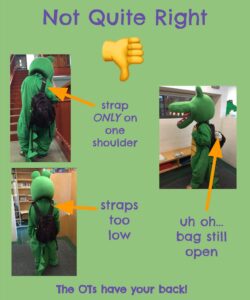
- Distribute weight evenly by using both straps. Wearing a pack slung over one shoulder can cause a child to lean to one side, curving the spine and causing pain or discomfort.
- Select a pack with well-padded shoulder straps. Shoulders and necks have many blood vessels and nerves that can cause pain and tingling in the neck, arms, and hands when too much pressure is applied.
- Adjust the shoulder straps so that the pack fits snugly on the child’s back. A pack that hangs loosely from the back can pull the child backwards and strain muscles.
- Wear the waist belt if the backpack has one. This helps distribute the pack’s weight more evenly.
- The bottom of the pack should rest in the curve of the lower back. It should never rest more than four inches below the child’s waistline.
- School backpacks come in different sizes for different ages. Choose the right size pack for your child as well as one with enough room for necessary school items.