 Although children may not be actively reading or watching the news, they absorb information, or misinformation, through a variety of sources. This could include being in the room with an adult who may be watching a story with violent or disturbing content, through social media, or through conversations with their friends. The recent news of Russia’s invasion of Ukraine is another tragic example.
Determining how to discuss disturbing events with your children is difficult. You should take your cues from your children, and closely monitor their reactions while remaining aware of your own emotional response. With younger children, it can be challenging to uncover how much they’re aware of and what information you want to alert them to. Older children may be aware of the situation and proactively ask you questions.
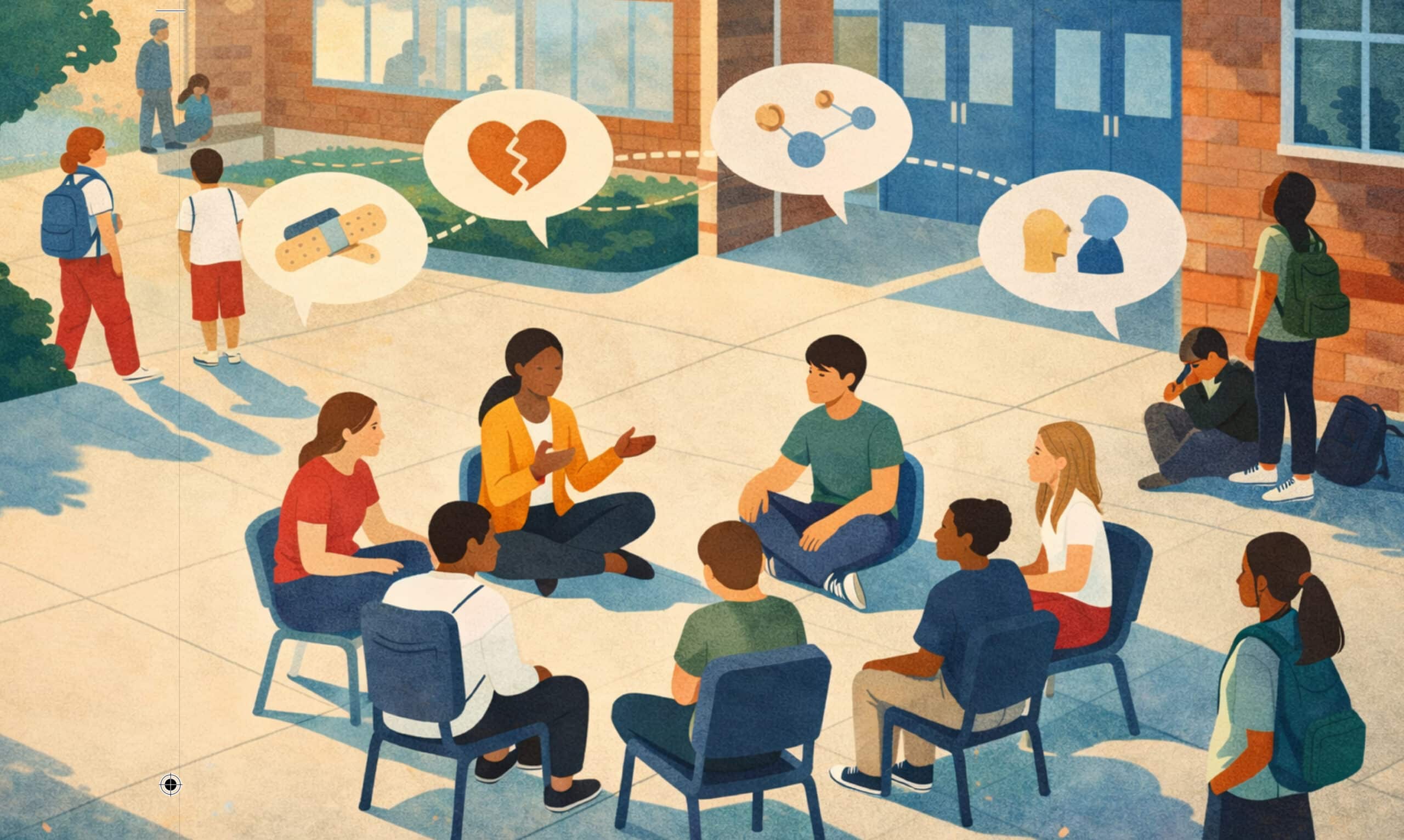
As always, our faculty and staff are prepared to address student questions and provide any support they may need. In our younger classes, we will not voluntarily bring up the topic, but we will be available to answer any questions that arise. We anticipate our older students will likely bring up the topic in class, in which case we will encourage them to share their emotions in a group or one-on-one setting, depending on their comfort level. We will reassure them of their safety, and remind them that there are many adults in the school who they can talk to. In addition, Dr. Cosentino and the psychology team will be available throughout the week, supporting teachers, visiting classes, and sitting down with students individually, as needed.
We have gathered a variety of resources that may help you as these events continue to unfold:
Although children may not be actively reading or watching the news, they absorb information, or misinformation, through a variety of sources. This could include being in the room with an adult who may be watching a story with violent or disturbing content, through social media, or through conversations with their friends. The recent news of Russia’s invasion of Ukraine is another tragic example.
Determining how to discuss disturbing events with your children is difficult. You should take your cues from your children, and closely monitor their reactions while remaining aware of your own emotional response. With younger children, it can be challenging to uncover how much they’re aware of and what information you want to alert them to. Older children may be aware of the situation and proactively ask you questions.
As always, our faculty and staff are prepared to address student questions and provide any support they may need. In our younger classes, we will not voluntarily bring up the topic, but we will be available to answer any questions that arise. We anticipate our older students will likely bring up the topic in class, in which case we will encourage them to share their emotions in a group or one-on-one setting, depending on their comfort level. We will reassure them of their safety, and remind them that there are many adults in the school who they can talk to. In addition, Dr. Cosentino and the psychology team will be available throughout the week, supporting teachers, visiting classes, and sitting down with students individually, as needed.
We have gathered a variety of resources that may help you as these events continue to unfold:
- Talking to your kids about the situation in Ukraine (CNN)
- Talking to Children About Violence, Crime, and War (Common Sense Media)
- How to talk to children about war: An age-by-age guide (TODAY.com)
- How to talk with students about the Russia-Ukraine War (Edweek)
- Talking to your kids about war (Verywell Family)